This blog is about learning

Ashoka Tree

ASHOKA TREE 


Botanical Name : Saraca asoca

Family : Fabaceae


The Ashoka tree, also known as Saraca asoca, is a beautiful, evergreen tree that is native to India and Sri Lanka. It is considered sacred in Hindu mythology and is often planted in temple courtyards and along roadsides.


The tree has a variety of traditional medicinal uses in Ayurveda, including the treatment of gynecological disorders, digestive problems, and skin diseases. The bark of the Ashoka tree is particularly prized for its healing properties, and is commonly used to treat uterine disorders and menstrual irregularities.

In addition to its medicinal uses, the Ashoka tree is also valued for its ornamental qualities. It has large, bright green leaves, and produces clusters of fragrant, bright orange-yellow flowers that bloom throughout the year. The tree's graceful, weeping branches and attractive foliage make it a popular choice for landscaping and garden design.

Jungle Jalebi

 MADRAS THORN


Botanical name : Pithecellobium dulce
Family : Fabaceae

Vernacular names : Manila Tamarind, Camachile, Jungle Jalebi


The Jungle Jalebi tree (Pithecellobium dulce) is a species of flowering tree in the family Fabaceae, native to Central and South America. It is also known as Madras Thorn, Manila Tamarind, or Camachile.

The tree can grow up to 25 meters tall, and it has a spreading canopy with branches that droop downwards. The leaves are pinnate, and each leaf has 8-16 pairs of leaflets. The flowers are small and white, and they bloom in clusters. The fruit of the Jungle Jalebi tree is a pod that is 7-20 cm long and 2-3 cm wide. The pods are brown in color and have a hard, woody shell. Inside the pod, there are 6-10 seeds that are surrounded by a sweet, sticky pulp.


The pulp of the Jungle Jalebi fruit is edible and has a sweet and sour taste. It is often used to make jams, jellies, and drinks. The seeds are also edible and can be roasted and eaten like nuts. The wood of the Jungle Jalebi tree is hard and durable, and it is used for making furniture and construction materials.


The Jungle Jalebi tree is a popular ornamental tree and is often planted in parks and gardens. It is also used in landscaping to provide shade and as a windbreak. The tree is drought-tolerant and can grow in a wide range of soil types, making it an ideal tree for reforestation projects.


Peacock Flower

 Peacock Flower

Botanical name : Caesalpinia pulcherrima
Family : Caesalpiniaceae
Sanskrit name : Ratnagandhi, Krishnachuda


Peacock tree, also known as Caesalpinia pulcherrima, is a flowering plant native to the tropical regions of Central and South America. The tree is named after the vibrant and colorful plumage of the peacock, which the flowers of the tree resemble in their shades of orange, red, yellow, and pink.


Peacock tree is a popular ornamental plant, prized for its showy, long-lasting flowers and lush, fern-like foliage. It can be grown as a small tree or large shrub, reaching heights of up to 15 feet. The tree is drought-tolerant and can thrive in a wide range of soil types, making it a low-maintenance addition to any garden.

The peacock tree is also valued for its medicinal properties. Various parts of the plant, including the flowers, leaves, and roots, have been used in traditional medicine to treat a variety of ailments, such as fever, respiratory problems, and digestive issues. Recent studies have also shown that the plant contains compounds that have anti-inflammatory and antioxidant properties, making it a promising candidate for the development of new drugs.


In addition to its ornamental and medicinal uses, the peacock tree has cultural significance in many parts of the world. In India, for example, the plant is known as "Krishna Kamal," and is associated with the Hindu deity Lord Krishna. The flowers of the tree are used in religious rituals and are believed to bring good luck and prosperity.

Despite its many benefits, the peacock tree is also known to be invasive in some regions, such as Hawaii and parts of Australia. In these areas, the tree can quickly spread and outcompete native vegetation, leading to ecological imbalances. As a result, it is important to exercise caution when introducing the peacock tree to new environments and to ensure that it does not become a threat to local ecosystems.


In conclusion, the peacock tree is a beautiful and versatile plant that offers many benefits to both humans and the environment. Whether grown for its showy flowers, medicinal properties, or cultural significance, this tree is sure to make a stunning addition to any garden or landscape. However, it is important to be mindful of its potential to become invasive in some regions and to take appropriate measures to prevent its spread.

Precision farming


 Precision farming

Meaning :

      Precision farming is actually a information & technology based farm management system to identify, analyse and manage special and temporary variability for optimum productivity, profitability and sustainability and protection of land resources by minimising cost for land preparation.

What is precision farming ?

       Precision Farming or Precision Agriculture is a concept of using the new technologies and collect field information for doing the right thing, in the right place, at the right time. Collected information may be used to more precisely evaluate optimum sowing density, estimate fertilizers and other input needs, and to more accurately predict crop yields.

History of Precision Farming :

      The concept of precision farming was emerged in early 1980's at United States. First time concept of precision farming was theorized by Dr. Pierre Robert Father of modern precision farming. He came up with the concept while in college and spent many years studying and pioneering precision farming principles.
      Since 1989, many U.S. farmers used low-input sustainable agriculture (LISA) techniques to reduce the usage of chemicals. This was followed by the use of yield monitors, the internet and global positioning systems. 
The first yield monitor was created in 1992 and further allowed adoption of technology in farming. 
The use of technology increased by 1994 with satellite technology (GPS). 
M.S.Swaminathan is said to be Father of precision farming in India.

Scopes of precision farming:

  1. Scope to increase profitabilityand sustainability.
  2. Scope in optimising product quality.
  3. Scope in optimising production quality.
  4. Most efficient chemical and seed use.
  5. Effective and efficient pest management.
  6. Scope in energy, water and soil conservation.
  7. Scope in minimising environmental impact.

Importance of precision farming:

  1. Reduced agronomic inputs.
  2. Better record keeping.
  3. On farm research.
  4. Reduced environmental impact.
  5. Property advantage.
  6. More ground farmed. 
  7. Increased profit through increased efficiency.

Site Specific Input Application:

The most commonly used consumable inputs are:

  • High-quality seeds.
  • Soil.
  • Fertilizers.
  • Insecticides.
  • Pesticides.
  • Insect Traps.
  • Straw.
  • Hay.
      These inputs should used at right time and right place, it will give proper yeild and growth in economy.

Components used in Precision Farming:

1) GPS (Geographical positioning system)

2) GIS (Geographical Information System)


3) Grid Sampling


4) Precision Irrigation


5) Remote sensor


6) Proximate sensor


7) Yeil monitoring


For powerpoint presentation click on below link......👇👇


Video link.....👇👇


The Soap Berry Tree

 Soap Berry Tree


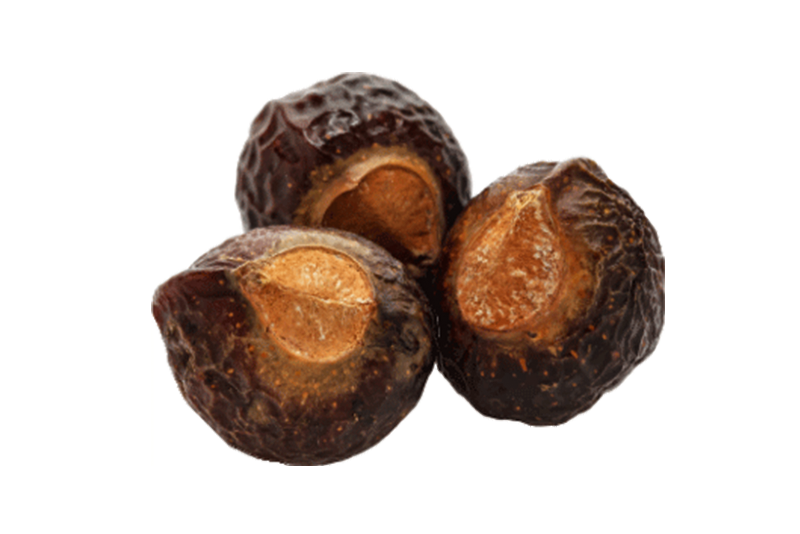
Bt.name. - Sapindus saponaria                                                        Family - Sapindaceae


Soap Berry Tree

In India the Soap Berry Tree is commonly known in Marathi as Reetha.

         Soap Berry Tree is native to warm temperate to tropical climatic conditions, soap berries are also known as soap nuts. This is from Sapindus genus which includes species of shrubs, and also some small trees from this we can say that the soap berry tree is a type of small tree. Soap Berry Tree is a deciduous tree which sheds their leaves at particular time to save water.

Leaves Of Reetha

Leaves are long about 15-40cm they are pinnate and contains 14-30 leaflets.

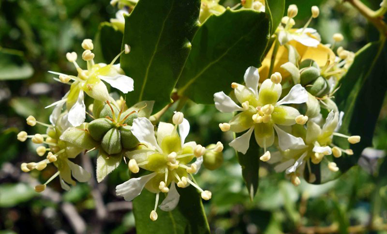
Flowers Of Reetha

Flowers are form in large panicles, each flower is small and creamy white in colour.

The fruit is small leathery skinned, it has diameter of 1-2 cm. The fruit become yellowish - blackish when it ripens, each fruit contains one to three seeds. 

The drupe contains saponins which having surfactant properties, and have been used by peoples of ancient Asia for washing their cloths as well as hands. 


THE TAMARIND TREE

 TAMARIND

Scientific name -  Tamarindus indica

Family - Fabaceae

COMMON NAMES:  

   1) The Tamarind. 

   2) Imli, Amli in Hindi.

   3) Tamarindus is from the Persian name for this tree tamar-i-Hindi, i.e., the date of India.

   4) Indica in Latin means Indian.

GENERAL INFORMATION ABOUT TAMARIND TREE:

   1) A very large handsome evergreen tree with dark grey rough bark. 

   2) Leaves with 10-20 pairs of leaflets. 


   3) Flowers about 0.5 inch long, variegated yellow and red, appearing in the hot weather. 

   4) Pods 3-6 inches long, 0.5 inch thick, filled with dark brown fibrous, acid pulp, containing 3-10 seeds, ripening in the cold weather.

   5) There is a variety the pod of which has sweet pulp and another variety with a reddish pulp. 

   6) The last named is considered the best.

USES OF THE TAMRIND TREE:

   1) In suitable places the tamarind is one of the finest trees in India, growing to an enormous size (a girth of 42 feet has been recorded) and reaching a great age. 

   2) The pulp of the fruit is a favourite ingredient of curries and chutneys, it is used medicinally and also for making sherbet. 

   3) The leaves and flowers are also eaten. 


   4) The timber is durable but hard and difficult to work.  

   5) Moreover the heartwood is rather small, otherwise the tree would be much more valuable foe timber. 

   6) It is used for mallets, rice-pounders, oil presses, etc.

HABITAT OF THE TAMRIUND TREE:

   1) Believed to be indigenous to Tropical Africa. 

   2) Now cultivated everywhere in the tropics and found growing spontaneously in Asia and America.

The Babul Tree


ACACIA ARABICA

Family – Leguminosae

Scientific name – Acacia arabica

COMMON NAMES:

  1. It is commonly called as the Babul tree.
  2. Gum Arabic
  3. Kikar or Babul in Hindi
  4. Babla in Bengali
  5. Karu-valam in Tamil and Malayalam
  6. Baval in Gujarati

GENERAL INFORMATION OF THE BABUL TREE:

  1. It is the small medium sized tree with dark-coloured rough bark.
  2. Young trees armed with strong straight ivory-white spines which may be 2 inches long.
  3. These spines occur in pairs at the leaf-stalk arid are absent on old trees.
  4. Branches subject to browsing by cattle are particularly well armed.
  5. These trees leaves are compound, divided up into a great number of very small leaflets.
  6. Flowers in golden balls about 0.5 in. diam.  The individual flowers being very small.
  7. Fruit is a grey velvety pod more or less constricted between the seeds.
  8. Flowers of these trees are appears during and after the rains, July to November.

USES OF THE BABUL TREE:

  1. All parts of these trees are useful and important to the village people.
  2. Branches and the leaves are cut down and used as the food for the cattle and the goats.
  3. The heavy wood is used as the fuel and charcoal, and is also used for making the farm tools.
  4. The gum, which comes from the trunk and oozes out of damaged parts of the bark from February to March which used for making sweets and glue.
  5. The twigs(a slender woody shoot growing from a branch or stem of tree or shrub) are used for cleaning the teeth.
  6. Lac is also obtained from this tree.
  7. The thorns are used as pins.

The Sissoo tree

                                     DALBERGIA SISSOO                            

Family- Fabaceae 

Scientific name - Dalbergia sissoo      

COMMON NAMES –

   1) It is called as Shisham, sissu or tali.

   2) Sisso is one of the vernacular names.

   3) It is also known as Indian rosewood tree.

GENERAL INFORMATION OF THE SISSOO TREE –

   1) A fairly large deciduous tree with dark grey rough bark.

   2) Leaves composed of 3-5 leaflets arranged alternately on a somewhat zigzag axis which is swollen at the base.

   3) Flowers about 0.25- inch long, yellowish-white, rather  numerous, inconspicuous but sweet-scented.

                             Leaves of the sissoo tree

the sissoo tree


   4) Stamens 9, united in a tube slit along the upper side.

   5) Fruit a thin strap-shaped pod 1.5-4 inches long by 0.3-0.5 inch wide, containing 1-4 flattened seeds.

   6) Leafless in January, February, the fresh foliage appearing in       7) March and the flowers soon after.

   8) The fruit ripens in November but remains hanging on the trees for several months.

USES OF THE SISSOO TREE –

   1) The shisham is the favourite road-side tree in upper India.

   2) For this purpose it has many advantages.

   3) It is easily grown, fairly rapid in growth, in full foliage during the hot weather and almost immune from lopping, barking and other forms of wanton damage. 

   4) The leaves are not used for fodder and the bark is not used for tanning or medicine.

   5) The timber is valuable.

   6) The sap-wood is perishable being very subject to attack by borers but the heart-wood is durable.

   7) It is hard, heavy, brown in colour with darker streaks.

   8) Though not easy to work it takes an excellent polish and is one of the main furniture woods.

   9) It is also used for spokes of wheels, carts, boats and many other purposes.

HABITAT OF THE SISSOO TREE –

   1) Indigenous along the foot of the Himalaya from the Indus to              2) Assam extending along the banks of rivers for some distance into the plains.

   3) As the result of cultivation it is now found in many places where it is not indigenous especially in irrigated tracts.

Morus alba


MORUS ALBA


Family – Moraceae

Scientific name – Morus alba

COMMON NAMES:

   1) The Mulberry.

   2) Tut.

   3) Morus is the Latin name for the mulberry.

   4) Alba in Latin means white and refers to the fruit.

GENERAL INFORMATION:

   1) This tree is a medium-sized deciduous tree, bark of large trees dark greyish brown, rough, the fissures mainly vertical.

   2) Leaves varying markedly in shape according to the age of the tree, in young plants and on vigorous shoots of old plants the leaves are usually deeply lobed, normally they are unlobed and 2-3 inches long.

   3) Flowers of this tree are unisexual, very small, greenish, the sexes separated on different axes either on the same branch or on the different branches or occasionally a tree produces only male spikes or only female spikes.

   4) Male spikes 0.5 -1.5 inches long, the flowers not densely crowded.

   5) Sepals 4, hairy, 1/10 inch long.

   6) Female spikes shorter than the male, the flowers crowded.

   7) Sepals 4, not hairy or only slightly so on the edges.

   8) Fruit 0.5 – 1 inch long, sometimes white, but more often red becoming black when ripe.

Mulberry Fruit

The Mulberry tree


   9) The fruit of the mulberry, using the term in its popular sense, is not a true fruit like a mango in that in that firstly it is produced by a cluster of flowers instead of one flower and secondly the edible portion consists of the sepals, which became enlarge succulent.

 10) The fruit strictly speaking is the portion which would ordinarily be called a seed.

 11) The mulberry is leafless during the cold weather.

 12) The flowers appear with the young leaves in March, April and the fruit ripens about a month after flowering.

 13) The twigs and leaves contain a milky juice which is not very copious.

USES OF THE MULBERRY:

   1) The leaves of the mulberry are used as food for silk-worms.

   2) The bark of small twigs contains a fibre and strips of bark can be used for tying in place of string.

   3) The wood is a fairly good substitute for ash and is used for tool handless, bent wood frames of badminton and cheap tennis rackets, hockey sticks and cricket stumps.

   4) It is also used for shaft and tongas.

   5) The fruit is edible but is not of good quality.

HABITAT:

   1) Native of China.

   2) Now found wild in the less tropical portions of India and has spread greatly with the extension of irrigation, tending to come up freely under the shade of other trees and sometimes replacing them in plantations.

   3) In Bengal and other more tropical parts of India this species is replaced by other mulberries some of which are indigenous.

Cedrela toona


CEDRELA TOONA

Family – Meliaceae

Scientific name – Cedrela toona

COMMON NAMES:

   1) It is named as Tun or Toon.

   2) Cedrela is from the latin Cedrus, the Cedar, and is given on account of the scented wood.

   3) Toona a latinized form of the vernacular name.  

GENERAL INFORMATION:

   1) This tree is a large deciduous tree.

   2) It has smooth bark in young trees, afterwards cracking longitudinally and transversely and exfoliating in irregular scales.

   3) Leaves 1-2 feet long, consisting of 4-15 pairs of leaflets, with occasionally a terminal leaflets in addition.

   4) Flowers 0.5 inch long, honey-scented, yellowish-white, in drooping bunches.

   5) Fruit is dry and opening with 5 valves when ripe, thus liberating the seeds and exposing a 5-angled column of soft white pith which occupies the centre of the fruit.

Leaves of Cedrela toona

Cedrela toona tree


   6) Seeds pale brown, flat, winged at both ends and very light.

   7) From the end of December to the middle of March this tree is leafless.

   8) The young leaves are fine pinkish red but soon change to bright green.

   9) The flowers appear from March to May and ripe seeds are produced in May to July.

   10) The empty fruits remain hanging on the trees long after the seeds are shed and may be seen when the trees are leafless.

USES OF THE CEDRELA TOONA:

   1) The bark is used medicinally as a tonic.

   2) A yellow dye is obtained from the flowers.

   3) The main value of the toon is however foe shade and timber.

   4) As it is of rapid growth and easily cultivated it is much used for roadside tree in moist localities.

   5) It reaches a height of 80 feet and girth of 10 feet and under favourable conditions will reach a girth of 5 feet in 30 years.

   6) The timber is red, seasons and works well and takes a good polish.

   7) It is durable and not very and consequently it is much used for furniture.

HABITAT:

   1) Throughout India and Burma but only in the moister tracts especially in ravines, near rivers or swampy places.